


 acelinestore1
Tennis is different from other sports because it combines physical fitness, quick reactions, smart tactics, and mental strength. Unlike football, basketball, or cricket, tennis singles usually puts the responsibility on one player to make decisions and control the match. Every serve, return, and rally can change the result.
However, tennis is not only about hitting the ball hard. Players must read their opponent, choose the right shot, and move quickly around the court. In addition, the scoring system, court surfaces, and tournament formats make tennis unique.
In this article, we will explore how tennis differs from other popular sports, explain its main rules, and look at what makes the game challenging.
1. Tennis Is Both an Individual and a Team Sport
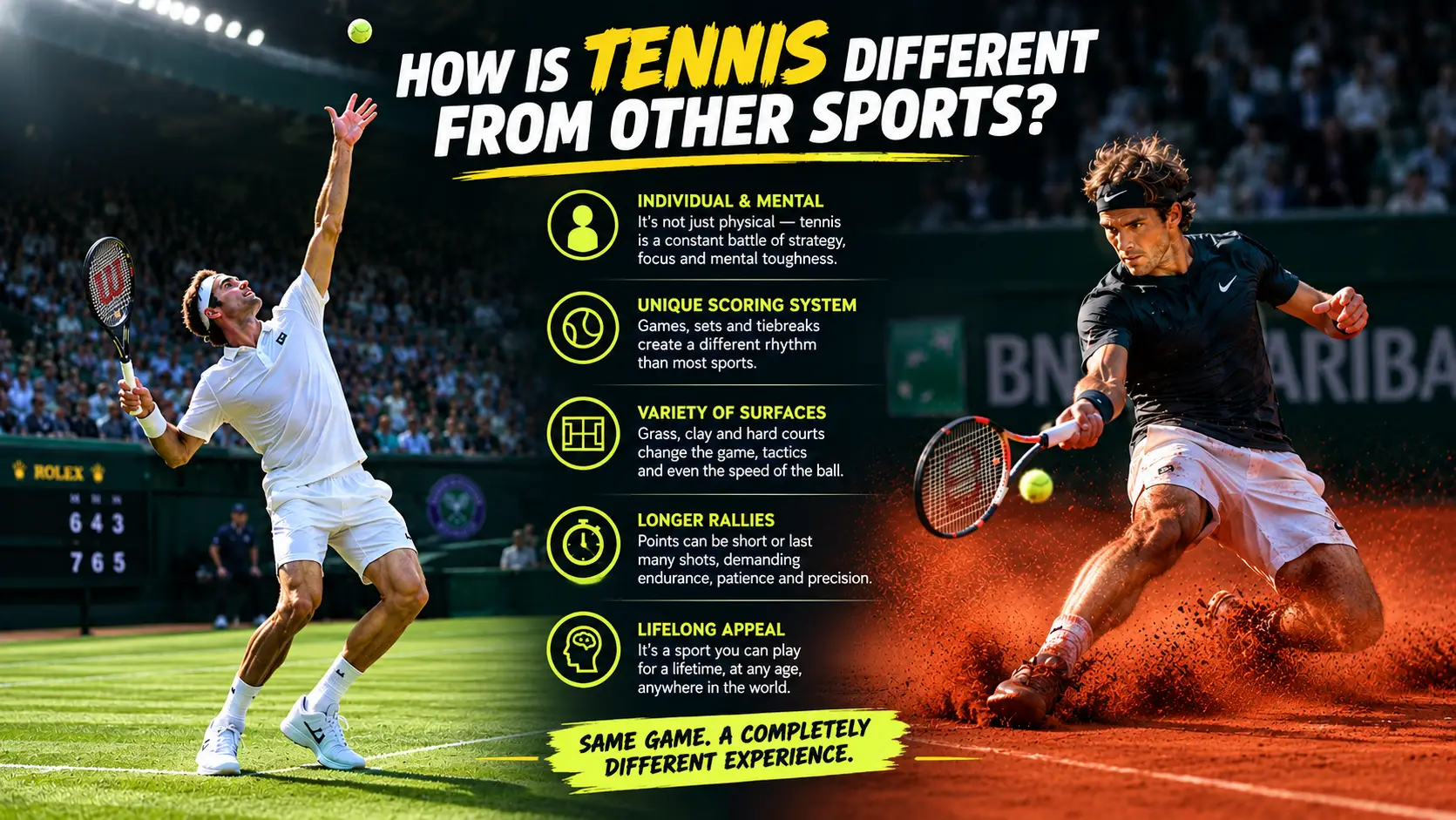
One major difference between tennis and many other sports is how players compete. In singles tennis, one player faces another player across the net. Each competitor must serve, return shots, cover the court, and manage pressure without help from a teammate during play.
By contrast, football and basketball depend on teamwork. Players pass the ball, create space, and work together to score. Cricket also involves a team working across batting, bowling, and fielding.
Tennis also has doubles, where two players form a team. In mixed doubles, each team includes one male and one female player. Therefore, tennis offers both individual competition and team-based play.
2. Tennis Has a Unique Scoring System
Tennis uses points, games, and sets to decide the winner. This system is different from sports such as football, where teams score goals, or basketball, where players score points.
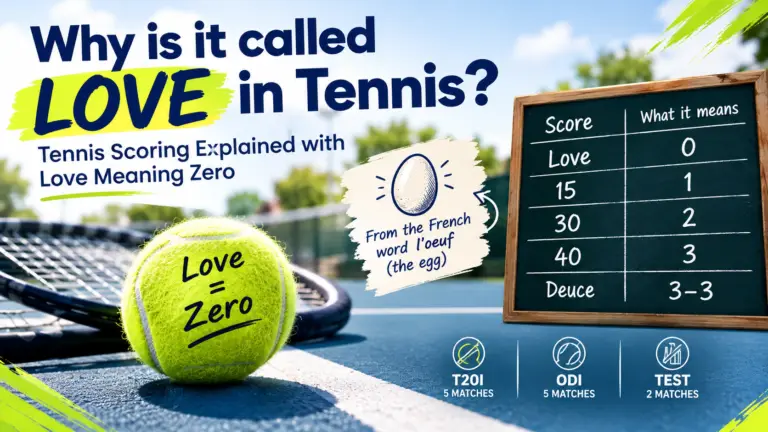
The basic tennis scoring sequence is:
- Love: Zero points
- 15: One point
- 30: Two points
- 40: Three points
- Game: A player wins the game by reaching the required score and gaining the necessary lead
When both players reach 40, the score is called deuce. From there, a player usually needs to win two consecutive points to take the game under the traditional advantage scoring system.
Furthermore, players generally need to win six games with a lead of at least two games to win a set. If the score reaches a level such as 6–6, a tiebreak is often played, depending on the tournament rules.
Most professional matches use a best-of-three-sets format. However, men’s singles matches at some Grand Slam tournaments use best-of-five sets. As a result, match length can vary widely.
3. Court Surfaces Can Change the Game
Another feature that sets tennis apart is the effect of court surfaces. Professional tennis is played mainly on hard courts, clay courts, and grass courts. Each surface affects the ball’s speed, bounce, and the way players move.
Hard courts
Hard courts provide a relatively balanced playing surface. They often support a mix of powerful serves, baseline rallies, and attacking shots. Many major tournaments, including the Australian Open and US Open, use hard courts.
Clay courts
Clay courts tend to slow the ball and produce a higher bounce. Therefore, rallies can last longer, and players often need patience, stamina, and good movement. The French Open is the best-known Grand Slam tournament played on clay.
Grass courts
Grass courts often produce a faster game with a lower bounce. Players may benefit from strong serves, quick reactions, and attacking play near the net. Wimbledon is the most famous grass-court tournament.
Because each surface plays differently, tennis players must adapt their strategies throughout the season.
4. Mental Strength Is Just as Important as Physical Fitness
Tennis demands more than speed and strength. Players must stay focused, control their emotions, and make good decisions when the pressure rises.
For example, a player may lose several points in a row but still have a chance to win the set. A missed shot can also affect confidence if the player fails to move on quickly.
Unlike many team sports, singles tennis does not allow a player to rely on a teammate to take over during a difficult moment. Players must manage their own mistakes and keep working towards the next point.
As a result, concentration and emotional control can be just as valuable as powerful shots or fast movement.
5. Tennis Requires a Mix of Skills and Tactics
Tennis players use different shots to control rallies and force mistakes. The right choice depends on the opponent’s position, the ball’s speed, and the player’s location on the court.
Some of the main skills include:
- Serve: Starts each point and can create an early advantage.
- Forehand: A common attacking shot used to move an opponent around the court.
- Backhand: Allows players to return shots from the opposite side of their body.
- Volley: A shot played before the ball bounces, often near the net.
- Drop shot: A soft shot designed to land close to the net.
- Slice: Adds backspin and can keep the ball low.
- Lob: Sends the ball high over an opponent who is close to the net.
However, hitting powerful shots is not enough. Players must know when to attack, when to defend, and when to change the pace. Smart shot selection often makes the difference between winning and losing a rally.
6. Every Point Can Change the Match
In tennis, even a single point can have a major effect on the match. Winning a point on break point, for example, can help a player break the opponent’s serve. Saving that same point can protect a player’s advantage.
This makes tennis especially tense during close games. A player may win many points overall but still lose if the opponent wins the most important points at key moments.
In football, one goal can decide the match. In cricket, a few runs or wickets can change the result. Tennis has a similar sense of pressure, but its point-by-point scoring creates frequent turning points throughout the match.
7. Tennis Matches Can Vary Greatly in Length
The length of a tennis match depends on the players, the scoring format, and how closely they compete. Some matches finish quickly, while others last several hours.
Long rallies, deuce games, tiebreaks, and deciding sets can all extend match time. Best-of-five matches may last longer than best-of-three matches, although this is not always the case.
Unlike sports with a fixed match clock, tennis generally continues until a player or team wins the required number of sets. Therefore, players need both stamina and the ability to maintain concentration over time.
8. Tennis Uses Different Tournament Formats
Tennis has a wide range of competitions, from local events to major international tournaments. Players compete in singles, doubles, and mixed doubles across different tours and age groups.
The four Grand Slam tournaments are among the most famous events in the sport:
- Australian Open: Played on hard courts.
- French Open: Played on clay courts.
- Wimbledon: Played on grass courts.
- US Open: Played on hard courts.
Each tournament has its own traditions, conditions, and match demands. In addition, players earn ranking points at eligible events, helping determine their positions in the professional rankings.
Tennis vs. Other Popular Sports
The following table highlights some of the main differences between tennis and other well-known sports.
| Feature | Tennis | Football | Cricket | Basketball |
|---|---|---|---|---|
| Main format | Singles or doubles | Team | Team | Team |
| Equipment | Racket and ball | Ball | Bat and ball | Ball |
| Scoring | Points, games, sets | Goals | Runs and wickets | Points |
| Playing area | Tennis court | Football field | Cricket ground | Basketball court |
| Main skills | Serving, returning, movement and shot selection | Passing, shooting and teamwork | Batting, bowling and fielding | Passing, dribbling and shooting |
| Match length | Varies by format and match | Usually 90 minutes of regular time | From a few hours to several days | Depends on the league and competition. |
| Key challenge | Individual decision-making in singles | Team coordination and tactics | Managing batting, bowling and fielding | Team play and scoring efficiency |
Although these sports have different rules, they all require practice, fitness, discipline, and smart decisions.
What Makes Tennis So Challenging?
Tennis is challenging because players must combine several skills at the same time. They need to move quickly, hit the ball accurately, read their opponent, and choose the right tactic within seconds.
Moreover, players must repeat these actions throughout the match. Fatigue can affect movement and shot control, while pressure can lead to mistakes at crucial moments.
The court surface adds another challenge because it changes how the ball behaves. Players who succeed on one surface may need to adjust their style on another.
Ultimately, tennis rewards consistency as well as talent. A player who stays patient, limits unforced errors, and makes better decisions under pressure has a strong chance of success.
Frequently Asked Questions
Is tennis harder than football?
Neither sport is automatically harder than the other. Tennis demands individual shot control, movement, and mental focus, especially in singles. Football requires teamwork, tactical awareness, endurance, and coordination across a larger playing area.
Why does tennis use 15, 30, and 40 for scoring?
Tennis uses a traditional scoring system that differs from most modern sports. The exact historical origin of the sequence is not fully settled, although several explanations have been proposed.
How many sets are played in tennis?
Many professional matches use best-of-three sets. However, some men’s singles matches at Grand Slam tournaments use best-of-five sets. The format depends on the event and competition rules.
What are the main tennis court surfaces?
The three main surfaces are hard court, clay, and grass. Each surface affects the ball’s speed and bounce, so players often adjust their tactics to suit the conditions.
Can tennis be played as a team sport?
Yes. Singles matches involve one player on each side, while doubles matches involve two players per side. Mixed doubles teams include one male and one female player.
Conclusion
Tennis stands out from other sports because of its scoring system, different court surfaces, individual demands, and tactical depth. Players must combine fitness with quick thinking and mental control to succeed.