


 acelinestore1
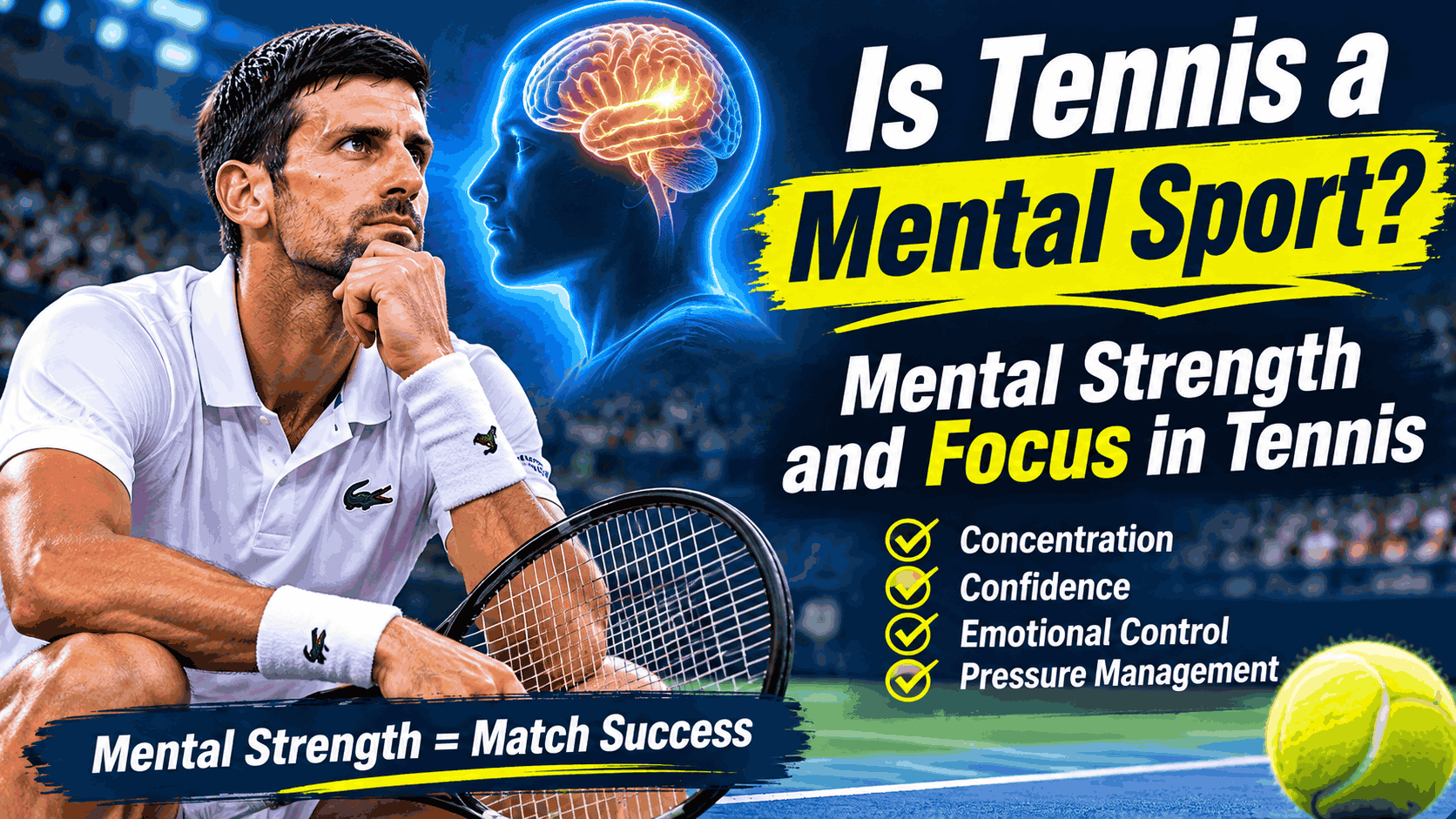
Tennis is not just about powerful serves, fast movement, or perfect shots. It is also a game of concentration, confidence, patience, and emotional control. That is why many players and fans ask: is tennis a mental sport?
The answer is yes. Tennis is both a physical and mental sport, and mental strength often makes the difference between winning and losing. Players must manage pressure, make quick decisions, and stay focused throughout a match.
Unlike many team sports, tennis players usually compete alone on the court. They cannot depend on teammates to solve problems during difficult moments. Instead, they must control their emotions, adjust their strategy, and trust their abilities.
Let’s explore why the mental side of tennis matters so much and how it affects performance at every level.
Why Is Tennis Considered a Mental Sport?
Tennis requires players to think clearly while performing physically demanding movements. Every point brings a new challenge, and players must respond within seconds.
For example, a player might lose several points in a row. They must quickly forget those mistakes and prepare for the next point. If frustration takes over, their performance can suffer.
Mental strength helps players manage these situations. It also allows them to stay patient during long rallies and maintain confidence when the opponent takes control.
Several mental skills play an important role in tennis:
- Concentration and focus
- Emotional control
- Confidence and self-belief
- Strategic thinking
- Patience and resilience
- Pressure management
These skills help players perform consistently, even when matches become difficult.
7 Mental Skills Every Tennis Player Needs
1. Concentration and Focus
Concentration is one of the most important mental skills in tennis. Players must watch the ball, read their opponent’s movements, and prepare for the next shot.
Even a small loss of focus can lead to an unforced error. Therefore, players need to stay mentally present during every point.
For instance, thinking about a missed shot during the next rally can affect timing and decision-making. Experienced players learn to focus on the current point instead.
This ability becomes especially important during tie-breaks and deciding sets.
2. Emotional Control
Tennis can create strong emotions. Players experience excitement after winning a difficult point and frustration after making simple mistakes.
However, emotional reactions can affect performance. A player who becomes angry might rush their shots or make poor decisions.
Emotional control helps players respond calmly to difficult situations. Instead of arguing with themselves after an error, they can reset and prepare for the next point.
That is why controlling emotions is a valuable part of tennis training.
3. Confidence and Self-Belief
Confidence helps players trust their abilities. It encourages them to attempt difficult shots and follow their game plan.
However, confidence can change during a match. A player might feel comfortable after winning the first set but become nervous after losing the second.
Strong players work to maintain belief in their abilities. They understand that one poor game does not decide the entire match.
Positive self-talk and regular practice can help build this confidence.
4. Strategic Thinking and Decision-Making
Tennis is not simply about hitting the ball as hard as possible. Players must understand their opponent’s strengths, weaknesses, and playing style.
They also need to choose the right shot at the right time.
For example, a player might use deep shots to push an opponent behind the baseline. Another strategy could involve targeting the opponent’s weaker backhand.
These decisions require quick thinking and awareness.
As a match develops, players must also adjust their tactics. A strategy that works in the first set may not work in the third.
5. Patience During Long Rallies
Patience is another important part of tennis. Not every point ends with a winner, and players often need to build rallies carefully.
Some opponents defend extremely well and force players to hit several extra shots. In these situations, rushing for a winner can create unnecessary errors.
Patient players wait for the right opportunity instead of forcing every shot.
This approach becomes especially useful on clay courts, where longer rallies are common.
6. Resilience After Losing Points
Every tennis player makes mistakes. Even the best professionals lose points, games, and sets.
The real challenge is how they respond afterward.
Resilience allows players to recover from setbacks without losing their confidence. They learn from mistakes and focus on the next opportunity.
For example, a player who loses an important service game must quickly regain concentration. Staying disappointed for too long can affect the following games.
Mental resilience helps players remain competitive even when the match is not going their way.
7. Handling Pressure in Important Moments
Pressure becomes stronger when the score is close. Match points, break points, and tie-breaks can test a player’s mental strength.
At these moments, players must control their nerves and make clear decisions.
A nervous player might play too safely or attempt an unnecessary winner. Both choices can create problems.
Experienced players develop routines that help them manage pressure. Deep breathing, positive thoughts, and consistent preparation can make a difference.
How Mental Strength Changes the Outcome of a Tennis Match
Two players can have similar physical abilities and technical skills. However, the player who handles pressure better may have an advantage.
Consider a close match where both players have won one set each. The final set becomes a test of concentration, patience, and confidence.
One player might become frustrated after missing a simple forehand. The other player stays calm and focuses on the next point.
That small difference can influence the match.
Mental strength helps players:
- Recover quickly after losing points.
- Maintain concentration during long matches.
- Make better decisions under pressure.
- Stay confident when facing strong opponents.
- Adjust their tactics when necessary.
Therefore, mental performance can influence the result just as much as physical preparation.
Examples of Mental Strength in Professional Tennis
Professional tennis provides many examples of players who demonstrate exceptional mental strength.
Novak Djokovic
Novak Djokovic is widely recognised for his ability to handle pressure during important moments. His concentration, defensive skills, and confidence have helped him compete successfully in long matches.
He often remains composed during difficult rallies and looks for opportunities to turn matches around.
His performances also show why patience and emotional control matter at the highest level.
Rafael Nadal
Rafael Nadal built his career around determination, intensity, and resilience. He continued fighting for points even when matches became physically and mentally demanding.
His approach showed the value of persistence and competitive spirit.
Roger Federer
Roger Federer demonstrated how calmness and tactical intelligence can support excellent tennis. His ability to make quick decisions and maintain composure helped him perform consistently throughout his career.
These players had different playing styles, but mental strength remained an important part of their success.
How Can Tennis Players Improve Their Mental Strength?
Mental toughness is not something players develop overnight. It improves through regular practice, experience, and the right habits.
Here are some practical ways to build stronger mental skills.
Develop a Pre-Point Routine
A consistent routine helps players prepare mentally before every point.
They can take a deep breath, adjust their strings, and visualise their next serve or return.
This routine creates a moment to reset before the next rally.
Practice Under Pressure
Training should include situations that feel like real match pressure.
For example, coaches can create tie-break challenges or practice games where players must win specific points.
These exercises help players become more comfortable with important moments.
Use Positive Self-Talk
Negative thoughts can damage confidence. Players should learn to replace them with simple, encouraging statements.
Useful examples include:
- Focus on the next point.
- Stay patient.
- Trust your preparation.
- Keep moving and stay positive.
Positive self-talk helps players redirect their attention toward what they can control.
Learn From Mistakes
Mistakes are part of tennis. Players should understand why an error happened instead of becoming frustrated.
They can review their shot selection, footwork, and positioning after practice.
This approach turns mistakes into learning opportunities.
Build Physical Fitness
Mental and physical fitness work together. Fatigue can make concentration and decision-making more difficult.
Therefore, players should develop stamina, strength, speed, and recovery habits.
A well-conditioned player may find it easier to stay mentally sharp during long matches.

Is Tennis More Mental or Physical?
Tennis requires both mental and physical strength. It is difficult to separate these two parts because they influence each other.
Physical fitness helps players move quickly, recover between points, and maintain performance. Meanwhile, mental strength helps them stay focused, manage pressure, and make smart decisions.
| Mental side | Physical side |
|---|---|
| Concentration | Speed and agility |
| Emotional control | Strength |
| Confidence | Stamina |
| Strategic thinking | Footwork |
| Patience | Flexibility |
| Pressure management | Recovery |
Neither side can replace the other. A physically strong player may struggle without concentration, while a mentally tough player still needs the fitness to compete.
The best tennis players develop both abilities together.
Frequently Asked Questions About Tennis as a Mental Sport
Is tennis a mental sport?
Yes. Tennis is a mental and physical sport. Players need concentration, confidence, emotional control, and strategic thinking to perform well.
Why is tennis mentally challenging?
Tennis is mentally challenging because players must make quick decisions, handle pressure, and recover from mistakes. They also compete individually, which requires strong self-control.
What is the most important mental skill in tennis?
There is no single answer for every player. However, concentration is essential because it helps players stay focused throughout a match.
How do tennis players stay calm under pressure?
Players use breathing techniques, pre-point routines, positive self-talk, and match experience. These habits help them control their emotions during important points.
Can mental strength improve tennis performance?
Yes. Mental strength can improve concentration, confidence, decision-making, and consistency. It helps players perform better in challenging situations.
Is tennis harder mentally than other sports?
Tennis has unique mental challenges because players usually compete individually and must manage pressure without direct help from teammates. However, many other sports also require exceptional mental strength.
Final Thoughts: Tennis Is a Game of Mind and Body
So, is tennis a mental sport? Absolutely. Physical ability helps players reach a high level, but mental strength helps them handle the challenges of competition.
Concentration, confidence, patience, and emotional control all influence performance. These skills become especially important during close matches and difficult moments.
For beginners, developing mental strength is just as valuable as practising serves and groundstrokes. With regular training and experience, players can become more confident and consistent on the court.
Ultimately, tennis is not only about hitting the perfect shot. It is also about making the right decision, staying calm, and believing in yourself when the pressure is highest.