




 acelinestore1
India produced a stunning batting performance to defeat New Zealand by six wickets in the New Zealand vs India 3rd T20I on 27 October 2026. Chasing 199 runs at Hnry Stadium in Wellington, India reached 199/4 in just 13.2 overs.
Abhishek Sharma led the chase with a remarkable 113 off 38 balls. Meanwhile, Vaibhav Sooryavanshi supported him with 45 from 19 deliveries, giving India a flying start that New Zealand struggled to contain.
New Zealand had posted 198/3 after batting first. Daryl Mitchell remained unbeaten on 89, while Finn Allen contributed 40 runs. However, India’s explosive opening partnership changed the contest before the middle overs could begin.
The victory gave India a 3–0 lead in the five-match T20I series. Moreover, Abhishek’s century earned him the Player of the Match award and became the defining performance of the evening.
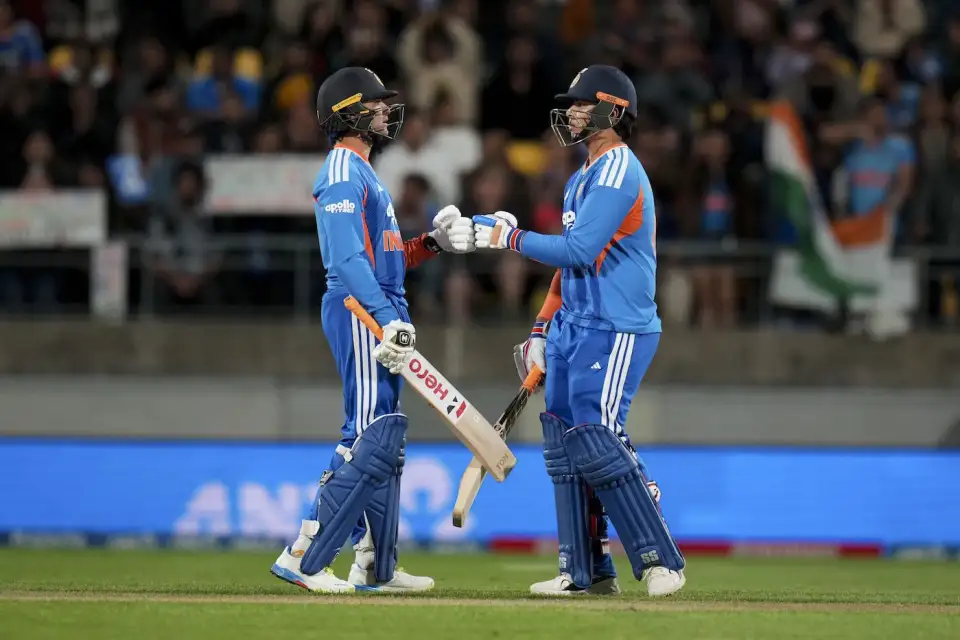
New Zealand vs India 3rd T20I 2026 Match Details
| Match Information | Details |
|---|---|
| Match | New Zealand vs India, 3rd T20I |
| Date | 27 October 2026 |
| Venue | Hnry Stadium, Wellington |
| Format | Men’s T20 International |
| Toss | India won and chose to bowl. |
| New Zealand score | 198/3 in 20 overs |
| India score | 199/4 in 13.2 overs |
| Result | India won by 6 wickets. |
| Player of the Match | Abhishek Sharma |
| Series score | India leads 3–0. |
India’s decision to bowl first allowed them to assess the conditions before beginning the chase. Although New Zealand scored almost 200 runs, India’s batting approach proved far more aggressive.
New Zealand vs. India 3rd T20I Scorecard
New Zealand Innings – 198/3 in 20 Overs
| Batter | Runs | Balls |
|---|---|---|
| Tim Seifert | 2 | 6 |
| Finn Allen | 40 | 25 |
| Daryl Mitchell | 89* | 52 |
| Glenn Phillips | 17 | 14 |
| Bevon Jacobs | 39* | 23 |
| Extras | 11 | — |
| Total | 198/3 | 20 overs |
Daryl Mitchell anchored New Zealand’s innings with an unbeaten 89. At the other end, Finn Allen attacked early, while Bevon Jacobs added valuable runs during the closing overs.
India Bowling Figures
| Bowler | Overs | Runs | Wickets |
|---|---|---|---|
| Bhuvneshwar Kumar | 4 | 40 | 0 |
| Arshdeep Singh | 4 | 33 | 1 |
| Prince Yadav | 4 | 44 | 0 |
| Axar Patel | 4 | 36 | 1 |
| Nitish Kumar Reddy | 4 | 38 | 1 |
Arshdeep Singh, Axar Patel, and Nitish Kumar Reddy claimed one wicket each. However, New Zealand’s batters still managed to build partnerships and reach a competitive total.
India Innings – 199/4 in 13.2 Overs
| Batter | Runs | Balls |
|---|---|---|
| Vaibhav Sooryavanshi | 45 | 19 |
| Abhishek Sharma | 113 | 38 |
| Sanju Samson | 18 | 13 |
| Shreyas Iyer | 5 | 10 |
| Tilak Varma | 1* | 1 |
| Naman Dhir | 4* | 1 |
| Extras | 13 | — |
| Total | 199/4 | 13.2 overs |
Abhishek’s strike rate reached 297.37, while Vaibhav scored at 236.84. Together, they added 133 runs from just 43 balls, giving India almost complete control of the chase.
New Zealand Bowling Figures
| Bowler | Overs | Runs | Wickets |
|---|---|---|---|
| Jacob Duffy | 2 | 44 | 0 |
| Adam Milne | 2 | 33 | 0 |
| Michael Bracewell | 2 | 36 | 0 |
| Kyle Jamieson | 3.2 | 45 | 2 |
| Matthew Fisher | 1 | 23 | 1 |
| Mitchell Santner | 3 | 17 | 1 |
Mitchell Santner was New Zealand’s most economical bowler, conceding only 17 runs in three overs and taking one wicket. Nevertheless, India’s aggressive batting overwhelmed the remaining bowling options.
Abhishek Sharma’s 113 Off 38 Balls Changes the Match
Abhishek Sharma delivered a breathtaking innings of 113 from only 38 balls. His knock included nine fours and 11 sixes, combining clean hitting with excellent control.
From the beginning, Abhishek attacked deliveries that offered width or sat in his preferred hitting areas. Rather than waiting for the bowlers to lose their discipline, he created pressure through positive shot selection.
He reached his half-century in just 15 balls. Consequently, New Zealand had little time to settle into a bowling rhythm or establish defensive fields.
Abhishek then continued his assault and completed his century in 35 balls. His scoring rate left the hosts searching for solutions, even when they managed to bowl a dot ball.
How Abhishek Attacked New Zealand’s Bowlers
Abhishek used the off-side effectively, finding gaps around cover and driving through the line. At the same time, he punished shorter deliveries whenever the bowlers failed to control their length.
New Zealand struggled because different lengths produced similar results. Full deliveries offered opportunities for lofted shots, while shorter balls gave Abhishek room to cut or pull.
The ground dimensions may have helped, but they do not fully explain the innings. Abhishek read the ball early, stayed balanced, and repeatedly found the boundary.
Kyle Jamieson eventually dismissed him for 113, with Glenn Phillips completing the catch. By that stage, however, India had already reached 178/2 and needed only 21 more runs.
Ultimately, Abhishek’s innings transformed a potentially competitive chase into a dominant victory.
Vaibhav Sooryavanshi Gives India a Flying Start
Vaibhav Sooryavanshi played an equally valuable supporting role. He scored 45 from 19 balls, hitting four fours and four sixes.
His aggressive approach prevented New Zealand from focusing entirely on Abhishek. As a result, the bowlers had to defend both sides of the wicket while trying to create opportunities for a breakthrough.
The pair added 133 runs from just 43 deliveries. That partnership removed much of the pressure associated with chasing a target of 199.
Vaibhav eventually fell to Matthew Fisher at 133/1 in the eighth over. Nevertheless, his contribution had already placed India in an excellent position.
This partnership also showed why T20 batting requires more than one aggressive player. Abhishek scored the century, but Vaibhav’s early hitting ensured that the scoring rate stayed high throughout the powerplay.
India’s 118-Run Powerplay Explained
India scored 118 runs without losing a wicket during the six-over powerplay. This extraordinary start became the turning point of the match.
Normally, teams balance attacking shots with careful running during the powerplay. India went much further by finding boundaries regularly and forcing New Zealand to change their plans almost every year.
When the bowlers attacked the stumps, the Indian openers found opportunities to hit straight or through the leg side. Meanwhile, wider deliveries gave them room to attack the off-side boundary.
India reached 50 runs in just 2.2 overs and crossed 100 in five overs. These milestones highlighted the scale of the opening assault.
Furthermore, the powerplay reduced the pressure on India’s middle order. Even after losing Vaibhav and Abhishek, the remaining batters needed only a handful of runs to finish the chase.
New Zealand needed early wickets to slow the scoring rate. Unfortunately for the hosts, the opening partnership denied them that opportunity.
New Zealand Innings Analysis
New Zealand’s 198/3 was a strong batting effort when viewed separately from the result. The hosts recovered from an early wicket, built useful partnerships, and scored at a competitive rate.
However, India’s extraordinary chase exposed how little room New Zealand’s bowlers had for error.
Finn Allen Provides Early Momentum
Finn Allen scored 40 from 25 balls, including five sixes. His attacking approach helped New Zealand maintain momentum after Tim Seifert departed for two.
Allen’s contribution also allowed Mitchell to build his innings without carrying the entire scoring burden. Their partnership gave New Zealand a solid foundation after the early setback.
However, Allen fell at 90/2 in the ninth over. His dismissal stopped the partnership from developing further and gave India an opportunity to control the middle overs.
Daryl Mitchell Anchors the Innings
Mitchell remained unbeaten on 89 from 52 balls, hitting five fours and five sixes. His innings combined stability with enough aggression to keep New Zealand moving towards a substantial total.
He built an 86-run partnership with Allen from 43 balls. Later, Mitchell and Jacobs added another 75 runs from 48 deliveries.
These partnerships helped New Zealand recover and finish strongly. Even so, the final total proved insufficient against India’s remarkable batting display.
Mitchell’s innings deserves credit despite the defeat. He managed the strike well, selected his attacking opportunities, and remained unbeaten at the end of the innings.
Bevon Jacobs Finishes Strongly
Jacobs scored 39 not out from 23 balls, including four fours and one six. His contribution helped New Zealand approach the 200-run mark.
Moreover, his partnership with Mitchell gave the innings a strong finish. New Zealand found contributions from several batters rather than relying on one individual.
The challenge, however, was defending that total. Against India’s aggressive opening pair, even a score close to 200 offered little protection.
Why New Zealand Lost Despite Scoring 198 Runs
New Zealand performed reasonably well with the bat. They recovered from an early wicket, established partnerships, and reached a total that often creates a competitive T20 match.
The real problem emerged when India began their chase. New Zealand could not take early wickets or slow the scoring rate.
1. India Built a Huge Opening Partnership
India’s opening pair added 133 runs before Vaibhav’s dismissal. Consequently, New Zealand had to defend most of their total while India’s main batters remained at the crease.
An early breakthrough could have forced India to rebuild and reduced their attacking freedom. Instead, the hosts allowed the opening partnership to dominate.
2. New Zealand Could Not Execute Their Bowling Plans
New Zealand’s bowlers struggled to find a length that consistently troubled the Indian batters. Full deliveries were driven, while shorter balls were punished when they lacked control.
Under pressure, the bowlers needed to vary their pace and use wider yorkers more effectively. However, accurate execution became difficult as the batters continued to attack.
3. Extras Added to the Pressure
New Zealand conceded 13 extras during India’s chase, including 10 wides and two no-balls. Those additional deliveries gave India more scoring opportunities without requiring a legal ball.
Wides can be particularly damaging during a chase because they extend the innings and increase the batting team’s total. Similarly, no-balls can create free-hit opportunities and disrupt the bowler’s rhythm.
Although extras did not decide the match alone, they added to New Zealand’s problems.
4. India Turned Momentum Into Complete Control
Once India scored 118 runs in the powerplay, New Zealand had to search for wickets rather than simply defend the boundary. That pressure made it harder to maintain consistent plans.
India took full advantage by continuing to attack. As a result, New Zealand struggled to regain control even when wickets eventually fell.
Key Turning Points of the Match
Tim Seifert Falls Early
Seifert scored two runs before Arshdeep Singh dismissed him. Although the wicket gave India an early advantage, Allen and Mitchell soon rebuilt New Zealand’s innings.
Allen and Mitchell Build a Strong Partnership
Their 86-run stand helped New Zealand recover and move towards a competitive total. However, Allen’s dismissal at 90/2 prevented the partnership from developing further.
India Explode in the Powerplay
The 118-run powerplay was the defining phase of the match. India’s opening pair attacked relentlessly, leaving New Zealand searching for a breakthrough.
Abhishek Completes His Century
Abhishek reached his century in just 35 balls, confirming India’s control over the chase. His innings combined power, timing and smart shot selection.
By then, New Zealand had very few realistic options to turn the match around.
India Finish the Chase in 13.2 Overs
India reached 199/4 with 40 balls remaining. This finish underlined the scale of the batting performance and secured the series with two matches still to play.
Player of the Match – Abhishek Sharma
Abhishek Sharma was the clear choice for Player of the Match after scoring 113 from 38 balls.
His innings influenced every stage of the chase. First, he attacked during the powerplay and put New Zealand under immediate pressure. Then, he maintained the scoring rate through the middle overs and ensured India never needed a late recovery.
The numbers explain his impact. Abhishek struck 11 sixes and nine fours, scoring 98 runs through boundaries alone. He added the remaining runs through running between the wickets.
His strike rate of 297.37 reflects the speed of the innings. More importantly, he made a target of 199 appear manageable long before India reached the halfway point of their innings.
What the Result Means for the T20I Series
India’s victory gave them a 3–0 lead in the five-match series. Therefore, New Zealand can no longer win the series, although they can still improve their performance in the remaining matches.
India will take confidence from their batting depth and ability to adapt to overseas conditions. Their top order has applied pressure early, while the bowling unit has contributed enough to restrict New Zealand’s scoring opportunities.
For New Zealand, improving their bowling discipline must become the priority. The team has produced a competitive total, but India’s aggressive approach exposed weaknesses during the powerplay.
They need early wickets and fewer extras to challenge India in the remaining matches. In addition, the bowlers must make their plans harder to predict.
Frequently Asked Questions
Who won the New Zealand vs India 3rd T20I on 27 October 2026?
India won by six wickets at Hnry Stadium in Wellington. They chased 199 runs in 13.2 overs after New Zealand scored 198/3.
How many runs did Abhishek Sharma score?
Abhishek Sharma scored 113 from 38 balls, including nine fours and 11 sixes. He completed his century in just 35 balls.
How many runs did Vaibhav Sooryavanshi score?
Vaibhav Sooryavanshi scored 45 from 19 balls, hitting four fours and four sixes.
What was New Zealand’s score?
New Zealand finished on 198/3 in 20 overs. Daryl Mitchell scored 89 not out, while Finn Allen made 40 and Bevon Jacobs added 39 not out.
How many runs did India score in the powerplay?
India scored 118 runs without losing a wicket in the first six overs. This explosive start set the tone for their successful chase.
Who won the Player of the Match award?
Abhishek Sharma won the award for his match-winning innings of 113 from 38 balls.
What is the series score after the third T20I?
India lead the five-match series 3–0. The result secured the series for India with two matches remaining.
Final Verdict
The New Zealand vs India 3rd T20I showed how aggressive batting can change a T20 match within a few overs. New Zealand scored 198/3, with Mitchell and Allen making useful contributions, but India’s opening pair made the target look far less demanding.
Abhishek Sharma’s 113 and Vaibhav Sooryavanshi’s 45 powered a 133-run opening partnership. Meanwhile, India’s 118-run powerplay left New Zealand searching for answers, and the visitors completed the chase with 40 balls remaining.
For India, the victory demonstrated the value of positive intent and excellent execution. Conversely, New Zealand must improve their powerplay bowling, tighten their lines and reduce extras.
India now hold a commanding 3–0 series lead. If their top order continues in this form, New Zealand will need a much stronger bowling performance to challenge them in the remaining matches.





One thought on “New Zealand vs India 3rd T20I 2026 Match Report and Analysis”